
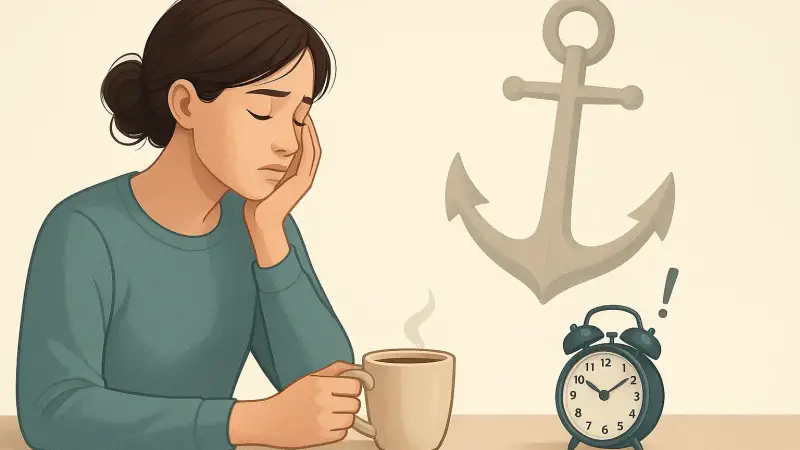
Why tiny routines feel bigger when you’re anxious
A person can be calm and still enjoy routines, but anxiety changes the stakes. This isn’t one single place or event. You can see it in a Tokyo commuter stepping onto the same train car each morning, a nurse in London starting a shift by lining up supplies the same way, or a student in New York rereading an email before pressing send. The routine isn’t “fixing” anything. It’s narrowing the world. When the mind is scanning for threat, even small choices can feel endless. A familiar sequence shrinks the number of decisions down to something the brain already knows how to run.
The overlooked detail is how physical these routines often are. It’s not just a thought like “I’ll be fine.” It’s the hand reaching for the same mug, the same seat, the same playlist, the same order of steps. The body gets a predictable script, and that predictability matters when attention keeps snapping toward worst-case possibilities.
What an anxious brain is trying to manage
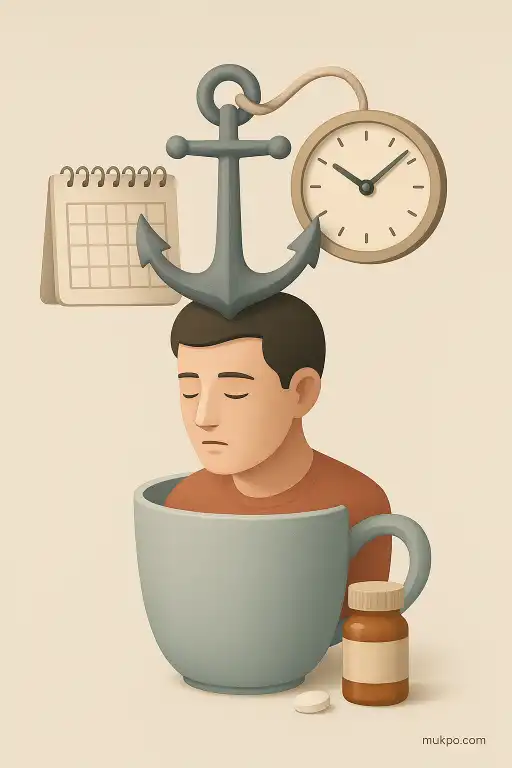
Anxiety tends to push the brain into a mode where it treats uncertainty as urgent. It leans hard on monitoring and checking. That can show up as replaying a conversation, scanning a room, or noticing every small sensation in the chest. Routines work differently than reassurance. Reassurance asks the mind to believe a new story. A routine offers something closer to a known track: fewer surprises, fewer branches, fewer moments where you have to evaluate what’s safe.
This is why routines can look “too small” from the outside. The action is simple, but the function is not. The person isn’t necessarily attached to the routine because it’s meaningful. They’re attached to how it reduces the load of constant interpretation. When interpretation is running hot, even neutral events start to demand an explanation.
How routines create a sense of control without solving the problem
The brain likes signals that it can predict what comes next. A routine produces those signals quickly: sequence, timing, and a clear “done” point. That “done” point is easy to miss, but it’s important. Anxiety often keeps tasks open-ended. Did I lock the door enough? Was that email phrased wrong? A routine turns a fuzzy question into a closed loop. You finish the steps and, at least for a moment, the system gets to stand down.
A concrete example is the person who always checks their bag in the same order before leaving: keys, wallet, phone, badge. It looks like a habit. In practice, it’s a fast way to avoid a spiral of rechecking. The sequence becomes a container. It doesn’t guarantee nothing will go wrong, but it reduces how long the mind stays stuck in “maybe.”
Why subtle routines are different from obvious rituals
Big rituals are easy to spot. Subtle routines blend in because they look like personality or preference. People might say they’re “just particular” about how they set up a desk, or they “always” start a workout with the same two minutes of stretching. These aren’t necessarily compulsions, and it can be unclear from the outside where the line is. The key difference is usually what happens when the routine gets interrupted. Some people shrug and adapt. Others feel a spike of agitation that seems out of proportion to the change.
Subtle routines also hide inside socially acceptable behavior. Being early, being prepared, double-checking details, keeping a clean workspace. Those can be strengths. They can also be ways of keeping the environment from generating extra uncertainty. The routine becomes a quiet negotiation with the day: fewer chances to be caught off guard.
What interruption reveals in real life
Interruptions show the job a routine was doing. A delayed train, a changed meeting room, a missing ingredient at home. The person who seemed fine can suddenly look tense, distracted, or unusually blunt. The routine wasn’t a decoration. It was a stabilizer. Without it, the brain has to rebuild a plan on the fly, and anxious minds often treat that as risk.
There’s a small timing detail people overlook here: anxious routines often happen right at transitions. Before leaving the house. Before opening a laptop. Before walking into a room. That’s when uncertainty is highest, because the next environment hasn’t been scanned yet. A short, repeatable sequence at the edge of change can make the jump feel less sharp, even if nothing else about the situation is actually different.

Related reads
- How Jupiter’s magnetic storms sculpt auroras
- An island that stops traffic for migrating crabs
- How hydrothermal vents build lush communities without sunlight
- How we make snap moral judgments in a blink
- When the Great Stink halted Victorian Parliament
- The silent chemistry that paints autumn leaves in reds and golds