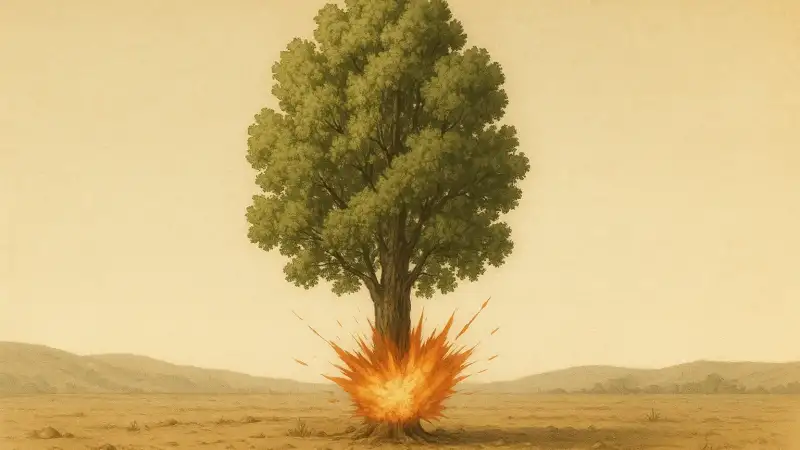
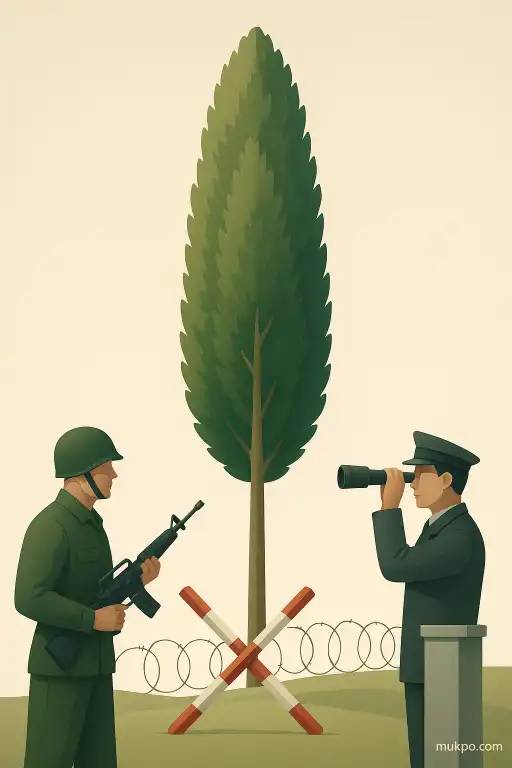
“`markdownSometimes a tree is just a tree, but sometimes it stands for far more. In August 1976, inside the Korean Demilitarized Zone, a lone poplar turned into the center of a simmering global standoff. The DMZ, a four-kilometer-wide buffer stretching across the Korean peninsula, is supposed to prevent armed conflict. But its quiet has always been uneasy. On one section called the Joint Security Area, American and South Korean troops worked only steps away from North Korean soldiers, every movement watched and measured. It’s here, at a spot known as the “Bridge of No Return,” where a seemingly trivial tree—and where it stood—almost became the reason for another war.The poplar blocks the line of sightFor years, the poplar grew beside a small road near the bridge connecting North and South. This was no ordinary bureaucratic nuisance. The branches kept American and South Korean guards from seeing directly across to a North Korean checkpoint. With visibility blocked, the soldiers felt exposed. Each side accused the other of taking advantage. It was a spot where the tiniest change might look like a threat.Routine becomes deadlyOn August 18, 1976, two American officers, Captain Arthur Bonifas and First Lieutenant Mark Barrett, led a work party to trim the poplar’s branches. North Korean guards objected immediately. After tense, shouted warnings, the situation exploded into violence—axes meant for pruning were used as weapons. Both officers died. The official North Korean statement later called the killing “self-defense,” but the Americans saw it as an unprovoked attack.The world takes noticeThe deaths shocked military leaders in Washington and Seoul. Both sides rapidly reinforced their outposts, and American bombers circled overhead. The United Nations Command set up Operation Paul Bunyan: not just to finish cutting the tree, but to show overwhelming strength. Bulldozers, soldiers, helicopters, and warplanes appeared all at once. For 42 minutes, the show of force was almost theatrical, highlighting how tense even the smallest act could be at the DMZ.A lesson in high-stakes symbolismWhat made the whole incident odd was that it came down to a single tree—alive, but caught in a strange tug-of-war. The poplar itself was not special, but its position meant neither side wanted to give anything up, even visually. The branch pile left behind after the operation became a snapshot in Cold War history: a reminder that in some places, routine maintenance required negotiation, backup, and the threat of global conflict.Lasting traces and quiet remindersEven now, the spot where the tree stood holds a small marker. Nearby, the Bridge of No Return looks unchanged to most visitors, but the story lingers in local memory. Security at the Joint Security Area remains just as rigid. Sometimes, details as minor as a tree—and the shadows it throws—can nearly push old enemies over the edge.“`