
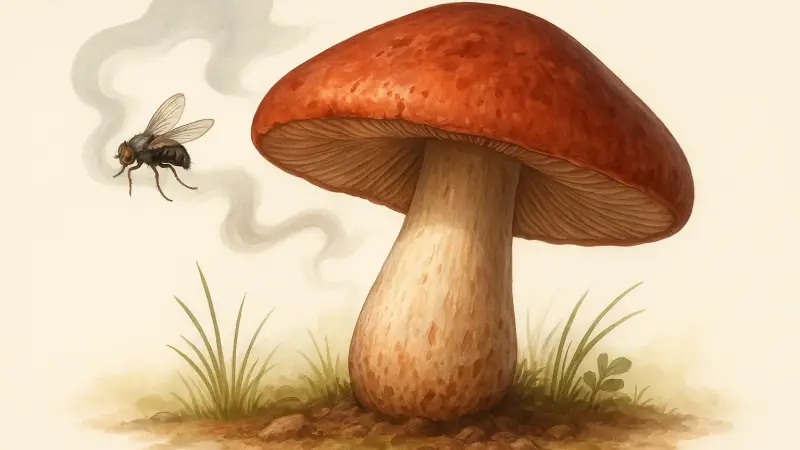
A smell you don’t expect from a “flower”
Most of the time, when something wants insects to visit, it smells sweet. But this isn’t one single species, and it isn’t limited to one place. You can run into the idea in the titan arum at botanic gardens in the United States and Europe, in rafflesia in parts of Indonesia and Malaysia, and in stinkhorn mushrooms across temperate forests and lawns. The mechanism is blunt. They make a scent that reads to flies like dead animal tissue. The flies arrive looking for food or a place to lay eggs, and the organism gets help moving its spores or pollen.
The mushroom version: stinkhorns and their sticky bait
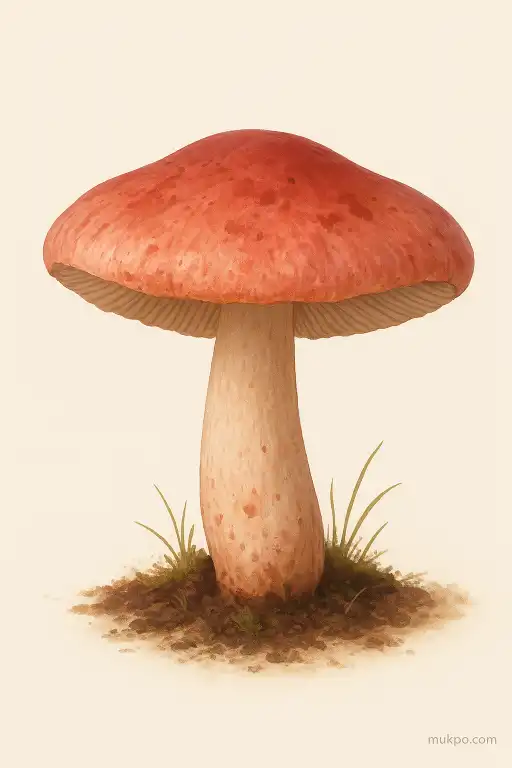
With mushrooms, the classic examples are stinkhorns, a group that includes species like Phallus impudicus in Europe and North America. They don’t just “smell bad.” They produce a slimy coating called gleba on the spore-bearing surface. That slime carries both the odor and the spores. It’s essentially bait you can pick up on your feet.
A detail people often overlook is that the spores aren’t mainly getting blown around like a typical mushroom puff. They’re packaged in that mucus. Flies land, feed, and leave with spores stuck to their legs and mouthparts, or they swallow spores and later deposit them elsewhere. The smell is doing recruitment, but the glue is doing the actual transport work.
Why flies fall for it
To a fly, “rotting meat” isn’t a joke smell. It’s a reliable sign of calories, and sometimes a nursery site. Different flies key in on slightly different cues, but the general target is carrion-loving species that already spend their time finding dead animals. The organism doesn’t need the fly to understand it’s being tricked. It just needs the fly’s normal behavior to kick in fast.
The chemistry can vary by species and even by conditions, but the theme is consistent: volatile compounds associated with decay. Some stinkhorns smell more like feces, some more like carcass, and some shift as the gleba ages. That matters because the “right” flies for one habitat might not be the same as the “right” flies in another. The scent is tuned to whoever is already out there.
What it looks like in a real moment
If you’ve ever seen a stinkhorn come up in a mulched garden bed, the timing can feel abrupt. One day there’s nothing. Then there’s an odd “egg” in the soil. After that, a spongy stalk expands quickly and lifts the gleba into the air, where the smell carries farther. It’s common to see several flies on it at once, walking the surface and feeding. Some will repeatedly take off and come back, which is perfect for spore movement across a small area.
Another overlooked detail is that the texture matters as much as the odor. The gleba isn’t just wet. It’s sticky in a way that makes feet linger and mouthparts work. That extra contact time increases the odds that spores attach or get ingested. The mushroom is shaping behavior with both smell and feel, not smell alone.
Rotting-meat smells aren’t just for mushrooms
The same basic trick shows up in plants, which is why people often confuse the stories. The titan arum (Amorphophallus titanum) is famous because it can fill a greenhouse with a wave of odor when it blooms, and botanic gardens often announce the event. Rafflesia does it on the forest floor with a huge, fleshy flower. Those are pollination systems, not spore systems, but they rely on the same kind of customer: insects that are already trained by evolution to home in on decay.
It can also be unclear, even within one species, how much of the success comes from pure deception versus mixed signals. Some flies may actually benefit by getting a meal from the slime. Others waste time laying eggs where larvae won’t survive. The organism doesn’t need every visitor to be “fooled” in the same way. It just needs enough traffic, at the right moment, to move its genetic material to the next place.
Related reads
- A street mural that rearranges its bricks to spell new names at dawn
- How a single antibiotic reshapes your gut microbiome
- The park fountain that refilled itself with freshwater during a drought
- A radio frequency that broadcasts the same lullaby across three countries
- Why certain minerals split light into rainbow halos
- A mailbox that returned postcards stamped before anyone living remembered