
When the doors stay shut for a reason that isn’t mechanical
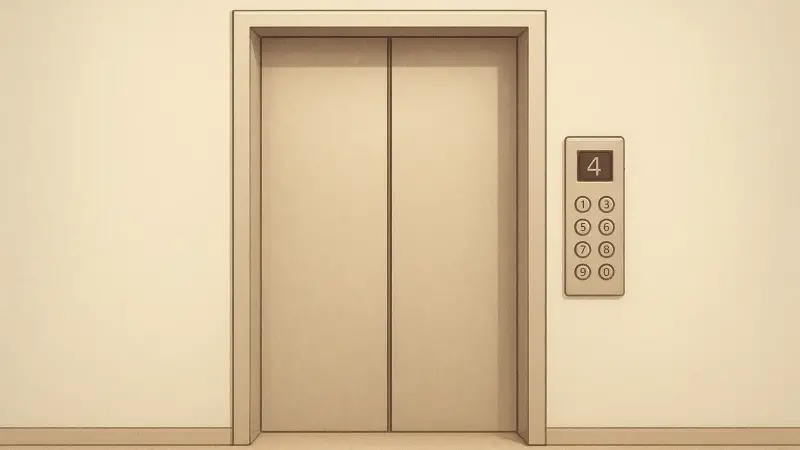
Picture a normal office elevator, the kind with a brushed metal panel and a polite chime. It runs fine all day. Then one person rides alone, selects the 7th floor, and the doors won’t open. Same elevator. Same floor. Different rider. There isn’t one famous building where this is documented as a real system rule, so it tends to show up as a thought experiment people swap in break rooms. It pops up in different settings because “odd birthdays” is a simple trigger: a passenger’s birth date has an odd-numbered day, or an odd-numbered year, depending on how the story is told.
What “odd birthdays” can mean in practice
The phrase sounds clear until you try to implement it. Some versions mean the day of the month: born on the 1st, 3rd, 5th, and so on. Others mean the year number is odd. Others mean the age is odd today, which changes every year and would make the behavior drift over time. That ambiguity matters because elevators don’t read vibes; they follow a rule that has to be encoded somewhere, even if it’s hidden.
One detail people usually overlook is what happens with missing or unverifiable data. Visitors without a profile. People who haven’t enrolled. Children without ID. If the system can’t confidently classify the rider, it needs a default: deny, allow, or ask for another credential. The whole “refuses to open” behavior depends on that default choice, not just the odd/even test.
How an elevator could “know” your birthday at all
For the doors to behave differently for different people, the elevator has to connect a rider to an identity. That can happen through a badge reader in the cab, a turnstile at the lobby, a destination dispatch kiosk, or an access-control system that assigns floors. Those setups already exist in many corporate buildings and hospitals. They don’t need a camera or face recognition. A badge ID number is enough to look up a profile field like date of birth, if that field is stored.
Once you imagine that plumbing, the odd-birthday rule starts to look less like a paranormal quirk and more like a policy mistake. The elevator controller would simply be doing what it’s told: it receives “authorized floor: yes/no,” then either releases the door interlock or keeps the car secured. The refusal can feel dramatic because it happens at the last second, right when the motor stops and the passenger expects the click of the latch.
Why the failure shows up as “won’t open” instead of “won’t go”
In real elevator logic, there are different points where a restriction can be enforced. Some systems prevent a call entirely. Others allow travel but block access at the landing. Blocking the door is a crude but effective way to enforce a rule when a car is shared, because the controller can’t easily guarantee which person will step out. If two riders with different permissions are inside, “don’t open” becomes the simplest enforcement action.
This is also where the story’s unsettling part becomes technically plausible. Elevators have door-zone sensors, lock contacts, and timers that can keep the doors closed for safety. If access control is layered on top, a denial can be made to look identical to a safety hold. The passenger sees a closed door and hears the normal hum. They don’t see the software decision that treated “odd birthday” like “not authorized.”
What makes the rule feel personal and “alive”
The odd-birthday condition has a weird social texture. It’s arbitrary, but it’s also intimate. People don’t announce their birth date in public, and many systems treat it as sensitive. That makes the elevator’s behavior feel like it’s reading something private. It also creates inconsistent witnesses: one coworker says the elevator is fine, another insists it trapped them, and neither is lying. They’re just triggering different branches of the same rule.
It also exploits a pattern people notice fast: odd and even floors already behave differently in some buildings because of skipped 13th floors, separate service levels, or zoning. Mix that familiar odd/even architecture with a hidden odd/even test about people, and the brain connects the dots. The doors don’t open, the floor number is odd, and later someone remembers they were born on the 9th. That’s enough for the idea to stick, even if the underlying “birthday check” is unclear or never actually existed.
Related reads
- How volcanic ash shapes global weather patterns
- How a tiny meteorite impact changes local soil chemistry
- The bench that always held a single lost glove belonging to the same person
- Why ordinary noises seem louder and creepier at night
- The mushroom that smells like rotting meat to lure flies
- A street mural that rearranges its bricks to spell new names at dawn