
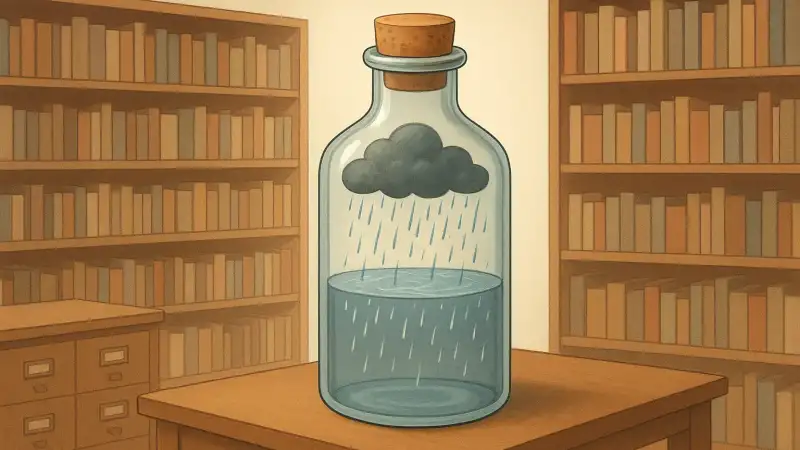
A strange kind of library loan
People know what it feels like to bring home a souvenir, but rain is the one thing most festivals treat as a problem, not a keepsake. This idea flips that. A “rain library” is set up to loan out small bottles of rainwater that were collected during specific events, so borrowers can hold a piece of the weather that happened that day. It isn’t one single, standardized institution, and the details vary depending on who runs it. The closest well-known precedent is the practice of collecting “holy water” at places like Lourdes in France—except here the point is the date, the crowd, and the storm that passed through.
How the rain gets collected during a festival
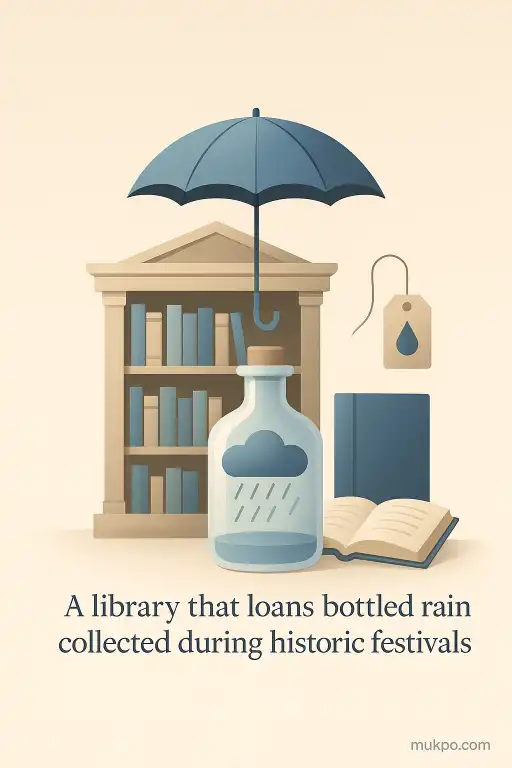
The collection moment is usually the whole story. Rain is gathered while the festival is actively happening, often from a clean, simple catch surface: a stainless-steel bowl, a glass funnel, a temporary canopy that drains into a container. The goal is to tie the bottle to a specific time and place, not to harvest a lot of water. When collectors take it seriously, they record the hour, the location within the site, and what the rain was doing—steady, misty, sudden downpour—because that’s what people ask about later.
One overlooked detail is that “festival rain” can be multiple waters mixed together if you are not careful. The first runoff from fabric awnings, tarps, painted surfaces, fireworks residue, nearby grills, or even confetti dye can end up in the bottle. If a library wants the bottle to be more than a gimmick, it needs a clear rule about first-flush rain versus later rain, and whether the bottle is meant to be handled like a collectible object rather than anything remotely drinkable.
What a borrower is actually borrowing
In practice, the loan is less about the water and more about the label. A bottle that says “rain from the parade route” or “rain during the closing set” functions like a time capsule. People borrow it to trigger a memory, to show someone else what a specific night felt like, or to use as a prop in a local exhibit. The bottle does not have to be rare to feel meaningful. It just has to be clearly tied to a moment that other people recognize.
Libraries that do this tend to treat the bottle like any fragile loan. The container is sealed, numbered, and stored upright in a crate or dark cabinet. Light matters more than most people expect. Not because of some magical effect, but because algae and cloudiness can appear over time if the bottle isn’t sterile and it sits in bright conditions. A small change in clarity can change how “authentic” it feels to a borrower, even if the label is the real artifact.
Cataloging weather like a collection
A rain library lives or dies on its catalog. The most useful entries include the event name, the exact date, and the specific collection point. Some will also include basic weather notes taken from a nearby station, but it is often unclear how formally that is verified. A bottle marked “rain during the fireworks” is easy to understand, yet it’s also the kind of description that becomes unreliable if nobody wrote down which fireworks show, which year, and what time the collection happened.
The overlooked piece is chain-of-custody. A borrowed bottle can be swapped, topped up, or accidentally spilled and refilled from a sink, and the library might never know. So some collections add tamper-evident seals, signed checkout cards, or even a quick photo of the bottle at checkout and return. Those aren’t dramatic measures. They are the same kind of quiet controls archives use for anything that can be replaced but can’t be proven once it’s altered.
Why anyone would build this in the first place
It’s a way of turning an unstable thing into a shareable record. Festivals are hard to preserve because they are mostly sound, crowd movement, and weather. Posters and tickets survive, but the atmosphere doesn’t. Rain is a shortcut to that atmosphere. It’s also a way to honor the days that didn’t go perfectly. The storm that flooded the food stalls or delayed the march is often the day locals remember most clearly.
There’s also a practical reason it tends to stay small. Storing hundreds of sealed bottles takes space, and questions come up fast about sanitation, liability, and what the library is implying by “loaning” a liquid. That’s why these collections often behave more like community archives than normal circulating libraries. They sit at the edge of what a library is allowed to be, and that tension is part of the appeal for the people who keep the bottles on the shelf.
Related reads
- A diner that serves one dish only on nights without moonlight
- How tiny pauses in speech reveal honesty and bluffing
- A market that sells jars labeled with the exact hour they were opened
- Methane-eating microbes that slow greenhouse emissions in thawing Arctic ponds
- Why deep-sea squid flash lopsided bioluminescence to disappear from predators
- How bristlecone pines archive millennia of drought in rings and resin