
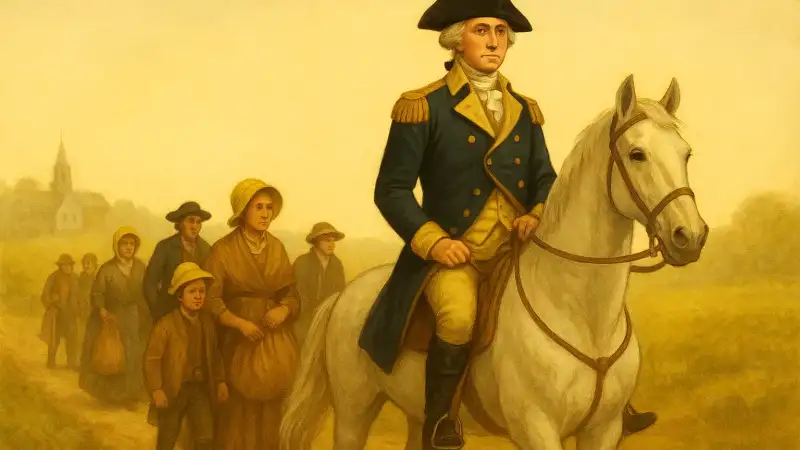
If a city suddenly feels dangerous, people don’t wait for a full explanation. They look for patterns. In Philadelphia in 1793, those patterns were brutal and confusing. The fever seemed to strike fast. It came with vomiting and blackened blood in some cases, which is why some called it “black vomit.” Street life thinned out. Shops shut their doors. And even though the federal government was sitting there because Philadelphia was the national capital at the time, officials did what ordinary residents did. They tried to get away from whatever was making people die.
Philadelphia’s panic had a timetable
The yellow fever outbreak didn’t feel like a slow-moving problem. It felt like a sudden shift in what was safe. There was no agreed germ theory, so people argued about causes in real time. Some blamed rotting coffee on a dock. Others blamed dirty streets, stagnant water, or “bad air.” The mechanism we recognize now—mosquito transmission—was not established for them. That uncertainty mattered, because it changed behavior. If you think the air itself is poisoned, every crowd and every enclosed room feels like a trap.
One overlooked detail is how much fear came from the way information moved. Notices went up. Church bells rang for funerals. Newspapers printed lists of deaths and pleas for aid. That created a daily drumbeat. Residents didn’t need to see a sick neighbor to feel the emergency. They could hear it and read it.
Washington’s absence was both practical and political
George Washington was not in Philadelphia when the epidemic crested. He was at Mount Vernon for part of that season, and later traveled elsewhere as the government tried to keep functioning. That fact gets flattened into a simple story—leaders fled—when it was messier. Yellow fever could kill quickly, and the capital had no modern public-health tools. Removing key officials from the epicenter reduced the odds that the entire executive branch would be incapacitated at once.
But leaving also carried a political cost. The country was young, and distrust traveled as fast as the stagecoaches. If the president and cabinet were absent while clerks, laborers, and sailors stayed behind, it could look like one set of lives mattered more. Washington had to weigh continuity of government against the optics of retreat, especially in a city that was supposed to embody national stability.
The capital didn’t just “shut down,” it scattered
What happened was less like a single evacuation and more like an improvised dispersal. Federal offices were small. Many functions depended on people physically showing up, handling papers, and finding one another. When clerks and messengers left town, the machinery didn’t so much stop as lose its connections. Meetings became harder to arrange. Deliveries slowed. Decisions that required several signatures could stretch out simply because the signers were no longer in the same place.
A concrete situational example: if a letter arrived from a customs official or a foreign representative, it could land in a city where the intended recipients were gone, dead, or refusing visitors. Even if someone knew where to forward it, travel itself was tangled. People avoided Philadelphia. Some towns talked about quarantines, or at least about keeping strangers at a distance. The routes into and out of the capital became part of the story.
Staying behind created a different kind of authority
While prominent figures left, others became central because they remained present. Philadelphia’s mayor, Matthew Clarkson, stayed and pushed emergency measures. The city’s leaders and volunteers organized care and relief in a situation where hospitals and household nursing were overwhelmed. People who were normally peripheral—neighbors who could carry water, keep watch, or check on the sick—became the working infrastructure of the city.
This created a strange split in what “leadership” looked like. The federal government still existed, but much of the visible day-to-day authority came from local actions: clearing streets, arranging burials, managing supplies, and trying to keep order. For residents, the face of government could feel very close and very improvised, even as national officials tried to make decisions from a safer distance.
The flight itself reshaped what people believed about disease
When thousands leave at once, they don’t just move bodies. They move theories. People carried stories about what “worked.” Some believed escaping the city saved them because distance meant cleaner air. Some kept changing lodgings to stay ahead of danger they couldn’t see. Others stayed put and survived, which muddied the narrative. With no clear mechanism accepted by everyone, survival looked like proof of whatever you already believed.
Another commonly missed detail is how the exodus changed Philadelphia’s social map. Houses sat empty. Certain neighborhoods were avoided. Work that kept the city running fell to those with the least ability to leave. Even after cold weather reduced mosquito activity and the fever faded, the memory of who left, who stayed, and who was asked to risk exposure lingered in ordinary relationships—tenants and landlords, employers and workers, officials and residents—long after the crisis stopped being visible on the street.
Related reads
- Neighbors kept finding tiny clay faces nailed into the trunks of maple trees on one street
- A sealed plaster cavity containing a century old shopping list with tomorrow’s date circled
- Phantom phone buzzes: how expectation rewires your touch senses
- How the Royal Mint’s Trial of the Pyx exposed coiners in Georgian London
- The piano whose ivory keys rearranged themselves while caretakers slept
- Bronze statue that seems to sweat during heat waves and spooks tourists