
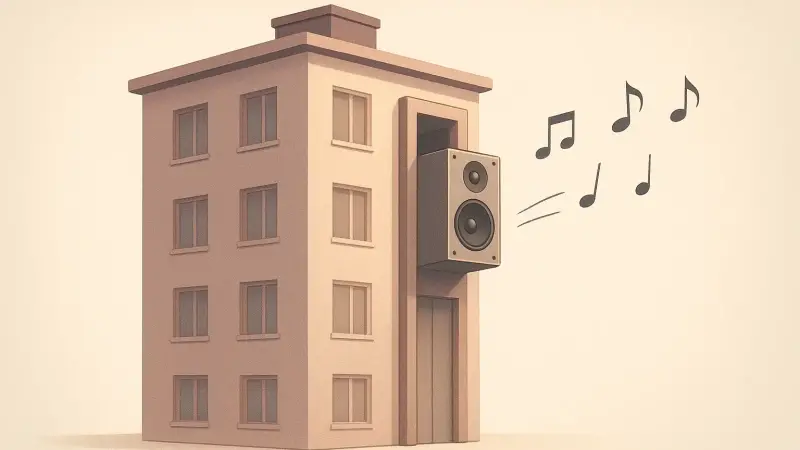
You know the tiny pause before an elevator closes its doors, when everyone stares at the button panel like it’s going to change its mind? Now imagine there are no floor buttons at all. In a few experimental and art-adjacent setups—not one famous single building—people have tried elevators that wait for a short melody instead. Similar “sound as control” ideas show up in places like Japan’s touchless design experiments and museum installations in the United States and Germany, though the exact implementations vary and aren’t always documented publicly. The basic mechanism is simple: a microphone, some pattern recognition, and a rule that says only the right tune unlocks the ride.
How a melody becomes a floor request
An elevator can treat a melody like a passcode. The system listens for a short sequence of notes, then maps that sequence to a destination. That mapping can be direct (“this tune means floor 7”) or conditional (“this tune means the service elevator,” but only during certain hours). The software part is not exotic. Phones do something similar when they identify a song, and call centers do it when they interpret speech commands.
The important difference is that an elevator cannot afford ambiguity. So these systems usually don’t try to recognize full songs. They use very short motifs with clear spacing, or they constrain the input to a narrow pitch range. If the building is loud, the elevator may require the melody to be repeated. Some prototypes add a visual cue, like a small light that blinks when the microphone has “locked on” to the pattern.
Why it’s harder than it sounds
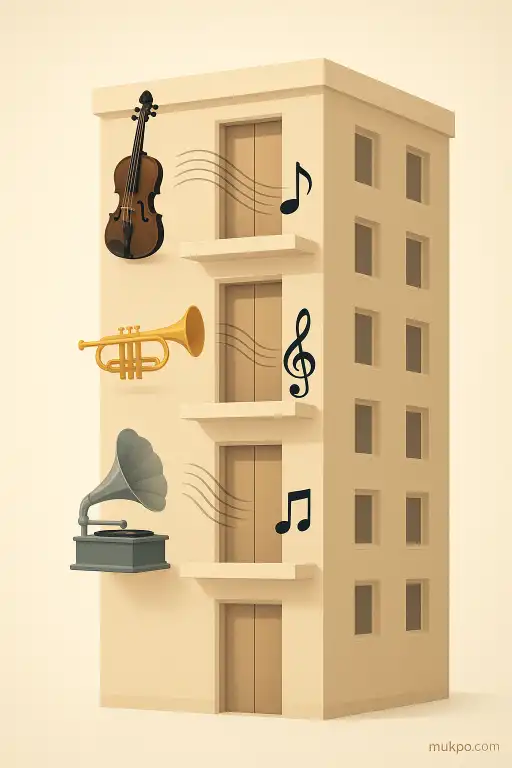
Elevator lobbies are noisy in specific ways. Fans, HVAC vents, rolling carts, and the hollow echo off tile all smear sound. A melody that’s easy to sing in a quiet room can be messy in a lobby. Recognition systems usually solve this by looking at relative pitch changes and timing rather than absolute pitch. That way, a child and an adult can hum the same pattern and still be recognized.
One detail people tend to overlook is the door chime. Many elevators already play a two- or three-note signal when doors open, and that sound can confuse a melody-based controller if the microphone is always listening. So the system has to “gate” its listening. It might only listen when someone is detected near the doors, or it might ignore audio during its own beeps and announcements.
What residents actually experience
The experience isn’t just novelty. It changes the lobby’s social dynamics. People tend to speak more quietly near the elevator, because nobody wants to trigger a ride by accident. In buildings that tried voice control, residents sometimes used code words. A melody version can feel more private, because a few notes are harder to interpret than a spoken floor number.
A concrete scenario: someone comes in carrying groceries, stops in front of the doors, and hums a three-note pattern. If the system recognizes it, the call registers and an indicator shows the assigned car. If it doesn’t, there’s a small delay and then nothing. That “nothing” matters. People can’t tell if they sang it wrong, if the elevator is busy, or if the microphone didn’t hear them. Most practical setups quietly add a fallback, like a hidden keypad for accessibility or maintenance.
Security, privacy, and the limits of a musical password
A melody is a weak secret if it’s the only lock. Anyone nearby can learn it. Sound also travels, especially down hallways and stairwells. Some designs try to counter this by pairing the melody with another signal, like a proximity badge, a phone handshake, or a time window. Then the tune is less a password and more a friendly “intent” signal: it tells the system which option you want after you’re already authorized.
Privacy is another trade. If microphones are always on, residents worry about recording. A careful implementation can process audio locally and discard it instantly after extracting pitch and timing features. But whether a given building does that is often unclear. Even if nothing is stored, the presence of an always-listening device in a shared lobby changes how people behave.
Why anyone builds this at all
The motivation is usually one of three things: touchless control, accessibility experiments, or a deliberate “designed experience” in a boutique property. Touchless interest spiked during COVID-era design discussions, even if most buildings ended up choosing simpler options like smartphone call buttons. Accessibility is mixed. A melody can help someone who can’t reach a panel, but it can also exclude people who are nonverbal, hard of hearing, or uncomfortable vocalizing in public.
In the end, melody control tends to survive only where the building can tolerate occasional confusion. That’s why it shows up more often as a prototype, a one-off installation, or a controlled environment than as the only interface in a typical residential tower, where people just want the doors to close and the ride to start.
Related reads
- Why some leaves hold beads of dew while others stay dry
- Why pretending calm can sometimes actually soothe your panic
- Why compliments can feel uncomfortable to receive
- How emotional moods spread through a group without a word being said
- How bombardier beetles fire boiling chemicals as defense
- Earworms explained: why a fragment of a song repeats in your head