
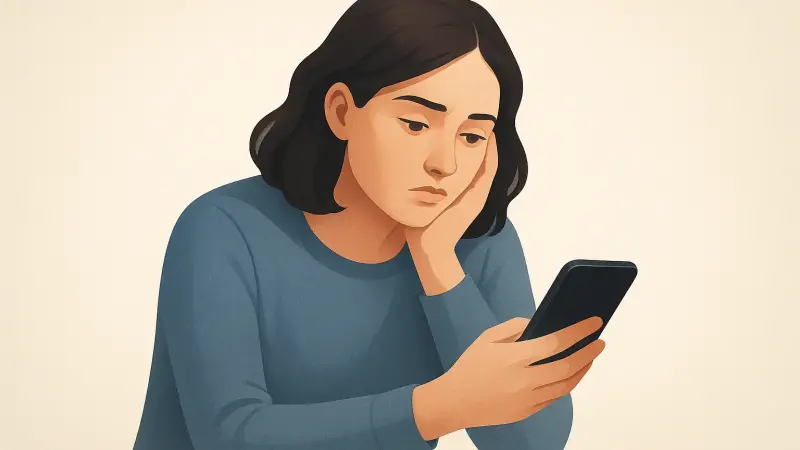
That quick check that turns into three
You unlock your phone, swipe down to refresh, and see the same empty notifications. Then you do it again a minute later. It isn’t one single place or event. It shows up on subways in New York, in cafés in London, and in long lines anywhere people are stuck waiting. The mechanism is simple to feel but hard to notice in the moment: the brain starts treating “maybe something arrived” as a tiny possibility worth sampling. The checking becomes a small experiment. Most of the time it returns nothing, but the act itself still changes how the next minute feels.
Uncertainty is the fuel
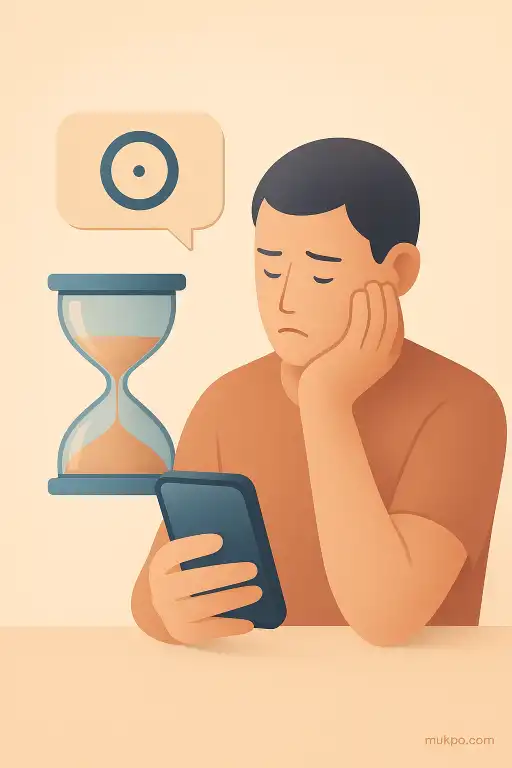
If notifications came on a predictable schedule, the urge would fade fast. The problem is that they don’t. Messages, likes, breaking news alerts, work pings, delivery updates—none of it arrives in a steady rhythm. That kind of irregular reward pattern is unusually good at keeping attention engaged. Not because each check is rewarding, but because the next check might be. A single “new” result after several empty ones is enough to make the whole routine feel rational, even when most checks are wasted.
This is also why the urge often spikes during downtime. Waiting rooms, elevators, crosswalks, video calls where you’re not speaking. The mind dislikes unassigned time. When there’s no clear task, checking offers a quick, low-effort way to create one, even if it lasts five seconds.
Anticipation can feel like a need
People often describe it as boredom, but anticipation is usually mixed in. If you sent a message and you’re waiting, your attention keeps circling the open loop. The phone becomes the physical location of that unresolved moment. A check is a way to ask, “Is it done yet?” even when you know, logically, that nothing has changed since the last time. That’s why the urge is strongest right after you put the phone down. The most recent memory is of checking, so checking feels like the obvious next move.
There’s a specific overlooked detail here: it isn’t just the content you’re after. It’s the relief of not having to wonder. Even a “nothing new” result can briefly calm the uncertainty, which makes it more likely you’ll reach for the same relief again when the feeling returns.
Phones train the hand, not just the mind
The urge isn’t always a thought. Often it’s a movement that starts before a sentence forms. That’s because the gesture sequence is frictionless and consistent: pick up, wake, glance, refresh, lock. Over time, that chain becomes a habit loop tied to small cues like a pause in conversation or a moment of awkwardness. The physical design matters. A screen that lights up instantly and an app that refreshes with one thumb motion make checking easy to repeat without deciding.
Micro-signals amplify it. A buzz that turns out to be nothing. A banner that disappears when you unlock. A badge count that doesn’t change but still catches your eye. Even when a notification is old, the icon can keep the sense of unfinished business alive, because the phone keeps presenting it as present.
Status, safety, and social timing
Not all checking is about entertainment. Some of it is social timing. People learn quickly that replying “too late” can create friction, especially in group chats. Some of it is work timing. A delayed response can look like disengagement, even when it’s reasonable. And some of it is plain safety monitoring, like waiting for a ride-share update or a family member’s text. The same motion—check, refresh—covers all of these motives, so the brain doesn’t neatly separate them.
That’s why the urge can show up even when nothing important is happening. The phone has become a general-purpose radar for belonging, obligations, and small risks. When the environment goes quiet, the radar sweep starts to feel like the default behavior, even if the screen keeps coming back empty.
Related reads
- The fish that uses sand like a file to reshape its jaws
- Why imagined confrontations can feel physically exhausting
- The man who survived seven lightning strikes
- The cramped shipboard trial that made citrus the Royal Navy’s cure for scurvy
- The lichen that drinks rock vapor to survive deserts
- How a single brief apology can dissolve social tension