
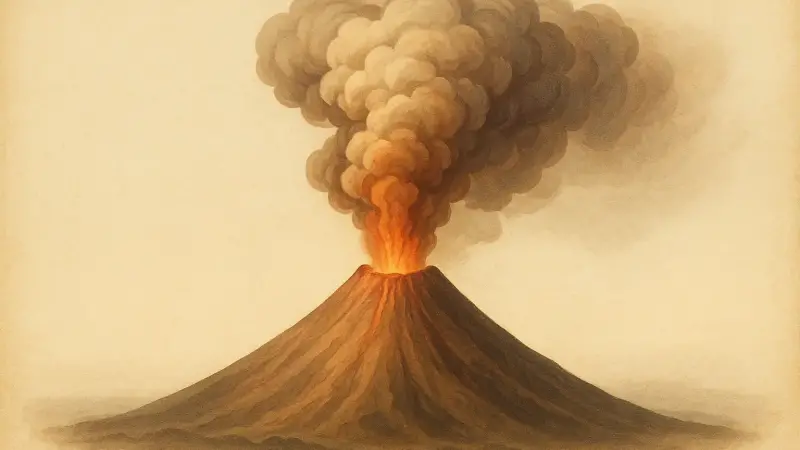
It’s strange to think that a volcano on an island in Indonesia could make June feel like March in Switzerland. But that’s roughly what people experienced after Mount Tambora erupted in April 1815. Within months, fine sulfur-rich particles and gases had climbed high into the atmosphere and spread around the globe. They didn’t block the Sun like a curtain. They scattered and reflected sunlight in a thin haze that nudged temperatures downward. In 1816, places like New England and parts of Europe saw repeated cold snaps, late frosts, and rain that wouldn’t let up. Weather isn’t the same everywhere, so the details varied. The disruption was broad enough to earn a nickname anyway.
Tambora’s eruption was big enough to change the sky
Tambora’s April 1815 eruption was one of the largest in recorded history. It blasted vast amounts of ash near the volcano, but the longer-lasting global effect came mainly from sulfur dioxide injected into the stratosphere. Up there, winds can spread material across hemispheres and keep it aloft longer than weather systems in the lower atmosphere. The sulfur dioxide reacts to form sulfate aerosols, which are especially good at reducing the amount of solar energy that reaches the surface.
A detail people often overlook is that this kind of cooling depends on altitude. Ash falls out relatively fast. The stratospheric sulfate haze can linger for a year or two. That timing helps explain why the hardest-hit growing season in Europe and North America was 1816, not the summer immediately after the eruption in 1815.
1816 didn’t feel like a normal “bad summer”
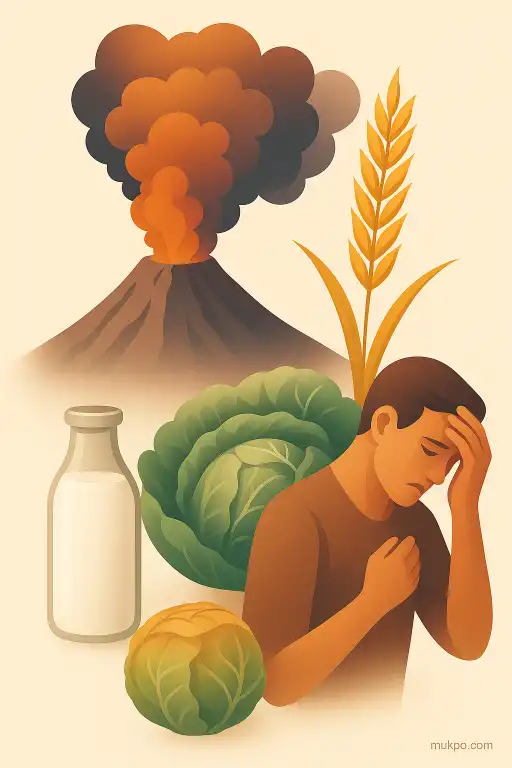
When the atmosphere cools a little, the effects don’t arrive as one neat pattern. Instead you get instability: stubborn rain, odd storm tracks, and cold air dipping into places that expect warmth. In parts of Europe the season was famously wet. In parts of North America, frost was the headline. Diaries and local records describe planting that failed, then replanting, then failing again. Not everywhere was equally cold every day, but the repeated hits mattered more than a single chilly week.
The everyday consequence was simple. Wet fields and short growing windows reduce grain yields. Cold nights can wipe out tender crops even if daytime temperatures seem fine. A vineyard can survive a cool season. A grain crop facing a late frost at the wrong moment often cannot.
Food prices rose first, and then tempers did
Once harvests came in short, the crisis became economic before it became political. Grain prices rose, and they rose fastest for people who already spent most of their income on food. Bread was not a side item. In many parts of Europe it was the basic daily calorie source, so even a moderate jump in price could feel like a hard wall. Markets also amplified the shock. Merchants held stocks, shipments arrived late on muddy roads and swollen rivers, and rumors traveled faster than wagons.
Food riots across Europe were not one single coordinated event. They were outbreaks that flared in different places as shortages and prices collided with local conditions. In the United Kingdom, the year is remembered for high food prices and unrest in a period already strained after the Napoleonic Wars. In parts of Switzerland and the German states, local authorities faced crowds demanding grain or price controls. These episodes varied by town and region, and the records don’t always agree on numbers. The common thread was a harvest shock that made daily meals uncertain.
Why “a little colder” became a public health problem
Short harvests don’t just mean hunger. They change diets quickly. People substitute cheaper grains, stretch flour with other plants, and eat food that would normally be animal feed. Malnutrition weakens resistance to disease, especially in crowded cities and among itinerant workers searching for wages and bread. Even when a place avoided outright famine, the stress showed up in higher illness and mortality in many communities.
There’s also a quiet logistical angle that rarely gets mentioned. Cold and rain don’t only harm crops. They complicate transport and storage. Damp grain spoils. Hay harvests fail, animals lose winter feed, and then meat and dairy supplies tighten too. A bad grain year can cascade into shortages across foods that seem unrelated at first glance.
People argued about causes long before they knew about aerosols
In 1816, most people did not connect local weather to a volcano on Sumbawa. They had other explanations: divine judgment, “unusual seasons,” comets, sunspots, or simple bad luck. Officials had to respond without a clear mechanism. Some places tried import measures or relief. Others leaned on policing. The confusion mattered because it shaped which responses seemed reasonable in the moment, and which groups got blamed when prices climbed.
Only later did scientists piece together how a stratospheric sulfate veil could cool the surface for a year or two. By then, the human memory that remained was concrete and local: a ruined harvest, a market that turned hostile, and the unsettling experience of watching summer fail to arrive on schedule.
Related reads
- A lost photograph that appeared framed in different homes with a new person’s face each week
- Jellyfish that revert to adolescence when stressed
- Sleep fog and the slow brain: what causes those first groggy minutes
- How volcanic ash once cooled climates and shrank harvests
- The fungus that turns tree leaves into luminous carpets
- Why volcanoes sometimes explode with blue flames